
Projects & initiatives
From the field to processing to community water: these are the initiatives Insansu Venture is developing, and where we are looking for partners and funders to build with us.
This proposed project would build climate-smart production and agro-processing capacity for indigenous crops across Northern and Luapula Provinces. Smallholder growers would be supported through the production stage, with produce aggregated and processed into two flagship products: peanut butter and composite flours.
The project is designed to demonstrate, at real scale, how indigenous crops can move from field to finished, market-ready nutrition products — while keeping the economic benefit close to the communities that grow them.
Insansu is establishing a presence in Luapula and Northern Provinces, and Kawambwa will be its base there: a facility where produce from smallholder growers is aggregated and processed into finished products.
It is the processing link for the Climate-Smart Indigenous Crops project, bringing peanut butter, composite flours and other value-added products closer to where the crops are grown, so more of the value stays in the province.
One model, three sites. The Hub brings solar-powered water to farming communities, keeping two lines fully separate: safe drinking water for homesteads, and drip irrigation for the fields. Households get a reliable tap at home and a productive plot, so they can grow high-value and indigenous vegetables through the whole year and not only in the rains.
The first site is at our farm in Chipongwe, Kafue, where we already grow under drip irrigation. The same model is planned for Kawambwa and for Mpanda Constituency in Mungwi District, where our survey found that most households draw water from wells. Final designs, scale and timing at each site depend on technical assessments and funding.
How the Hub works
Each site follows the same simple layout, built around a central water point and an anchor farm that the surrounding households connect to.
A borehole with a solar pump supplies the Hub, so running costs stay low and pumping does not depend on the grid.
Water is held in elevated storage and sent along two lines: one for drinking, one for irrigation. Keeping them apart protects household water quality.
Lead households each receive a tap, so families have safe drinking water close to the home and no longer rely on open wells.
Drip lines deliver water at the roots of each plant, using less water and allowing growing through the dry season.
A central anchor farm demonstrates good practice, supplies inputs and seedlings, and acts as the learning point for the Hub.
Households grow to a common plan, sell through Insansu's aggregation, and mentor neighbouring farmers as the Hub grows.
Alongside the infrastructure we promote climate-smart practices such as mulching, farm-made compost and careful water management, so that more water and better soils turn into steadier harvests and income.
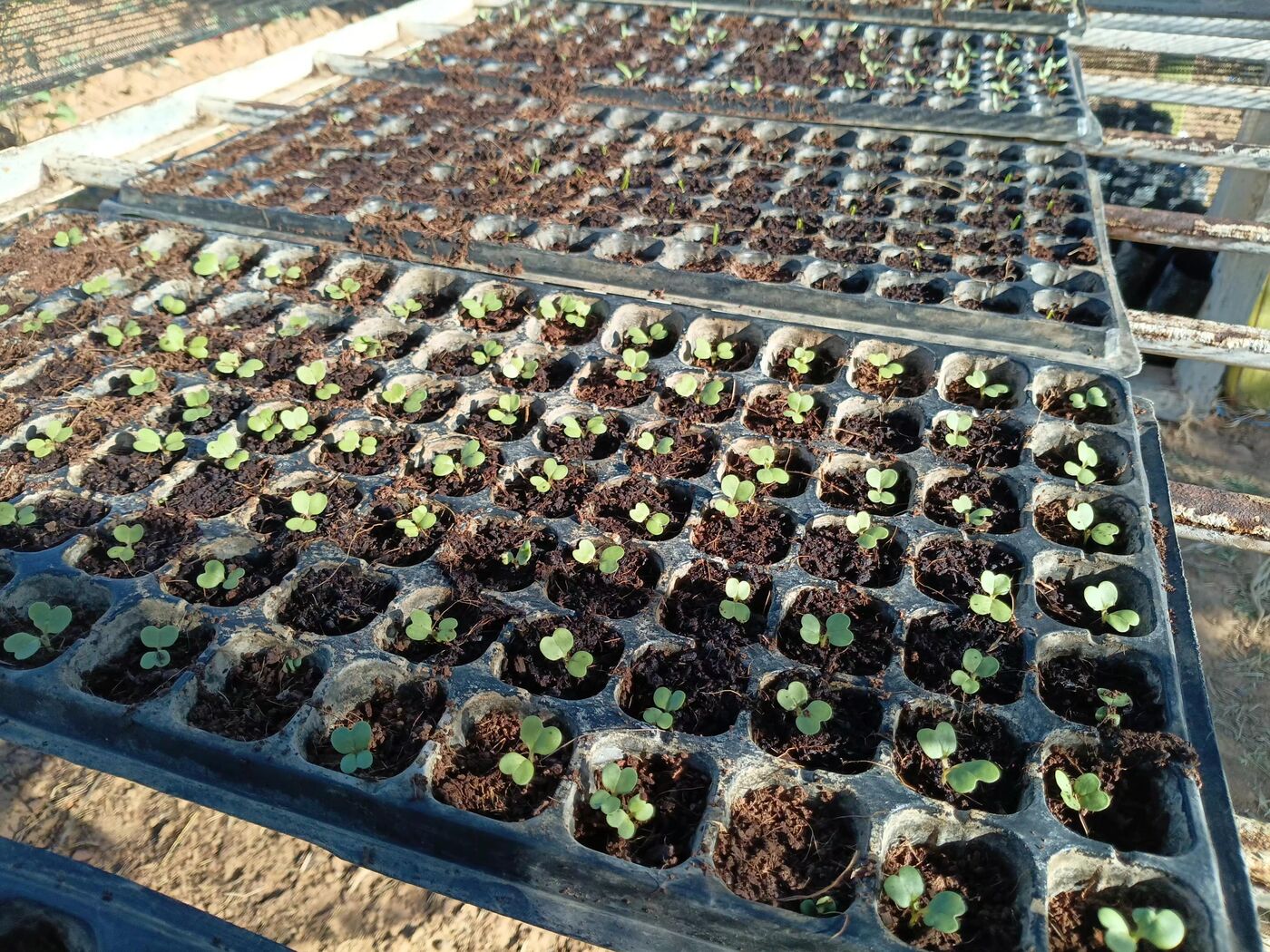
We are setting up a nursery to raise healthy seedlings for our own fields and for the smallholder growers we work with, including indigenous vegetables alongside cabbage, onion and tomato.
Starting crops from strong seedlings gives growers a more reliable harvest, and it ties directly into our Water & Irrigation Hub and the wider Insansu value chain.
Also in development
An early-stage agritourism concept, combining the Insansu setting with agritourism experiences for visitors — connecting the story of indigenous crops and climate-smart farming to the people who grow them.
Discuss a partnership